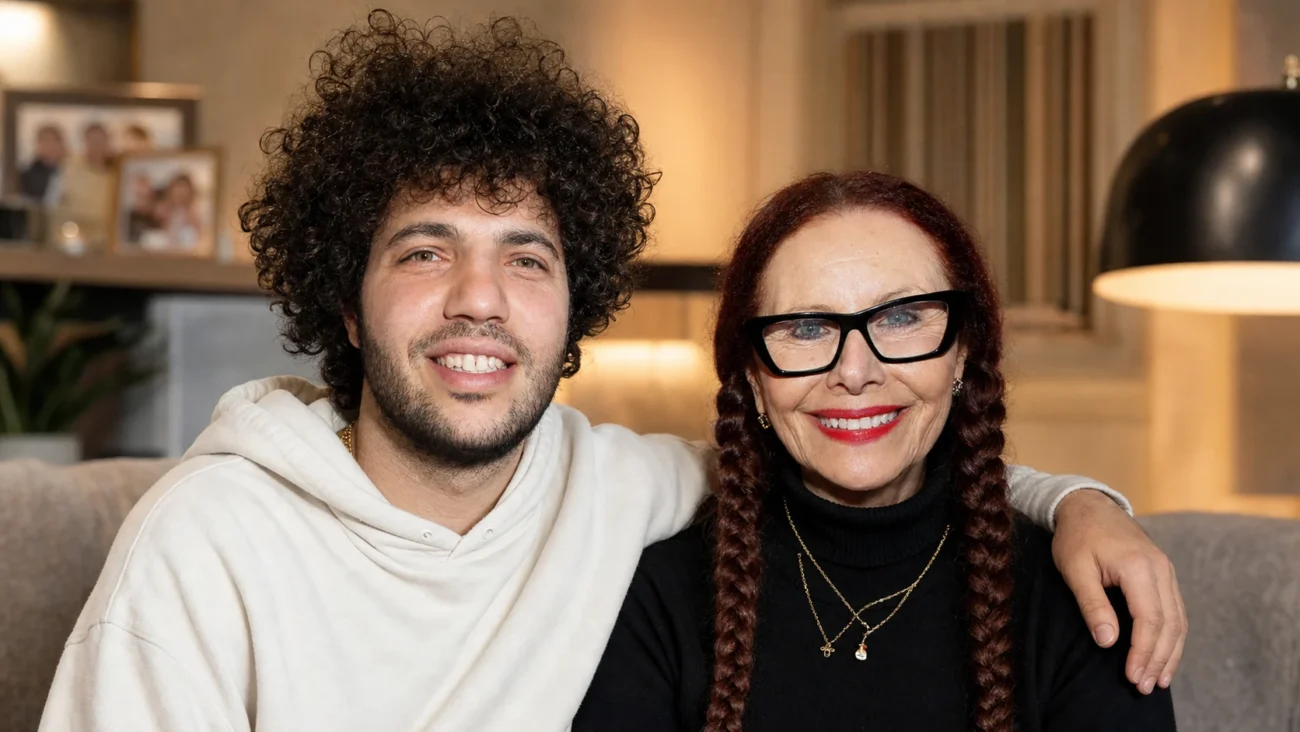
Benny Blanco built his reputation behind the scenes, helping create hit records for artists including Katy Perry, Rihanna, Maroon 5, Justin Bieber, Ed Sheeran, Halsey, and Selena Gomez. Although his professional name has sometimes led to assumptions about his ancestry, Blanco is an American of Ashkenazi Jewish heritage. He was born Benjamin Joseph Levin on March 8, 1988, in Reston, Virginia, and is 38 years old as of August 2026.
His ethnicity has drawn greater public interest as he has moved from being a largely anonymous record producer to a recording artist, cookbook author, television personality, and celebrity partner. The name “Blanco,” his work with musicians from many cultural backgrounds, and his relationship with Selena Gomez have all contributed to confusion online. His documented background, however, is Jewish American rather than Hispanic or Latino.
Blanco’s heritage is visible less through formal statements about ancestry than through the family traditions he has shared publicly. He has spoken about growing up Jewish, celebrated Jewish holidays, discussed foods associated with Ashkenazi families, and included those memories in his 2024 cookbook. His story is therefore not only about ancestry but also about how family, humor, food, and music shaped one of pop’s most successful modern producers.
What Is Benny Blanco’s Ethnicity?
Benny Blanco is of Ashkenazi Jewish ethnicity and is American by nationality. Ashkenazi Jews are descended from Jewish communities that developed over centuries in Central and Eastern Europe, though Blanco has not published a detailed family tree identifying the precise countries connected to every branch of his ancestry.
The most accurate description is therefore Ashkenazi Jewish American. Claims that he is Puerto Rican, Mexican, Cuban, Spanish, or otherwise Latino are not supported by reliable public information. His professional surname has caused much of that confusion, but it is not his birth surname.
Jewish identity may describe religion, ancestry, culture, or a combination of those elements. Blanco has publicly embraced his Jewish background through family stories and celebrations, but the exact nature of his religious observance is private. He has not offered a detailed account of synagogue membership, denomination, or personal religious practice.
That distinction matters because ethnicity and religion are related but not identical. Someone can have Jewish ancestry while being secular, religious, culturally Jewish, or connected to Judaism in several ways at once. Blanco’s public comments suggest that food, family, and shared tradition are central parts of how he experiences his identity.
Real Name, Age, and Birthplace
Benny Blanco’s full birth name is Benjamin Joseph Levin. He was born on March 8, 1988, in Reston, Virginia, a community outside Washington, D.C. His nationality is American, and he spent his childhood in the United States.
As of August 2026, Blanco is 38 years old. He grew up far from the established recording centers of Los Angeles and New York, but he became interested in music at an early age. He experimented with beats, recorded sounds at home, and tried to contact industry professionals while still a teenager.
His legal surname, Levin, is commonly found among Jewish families, though a surname alone cannot establish a person’s full ancestry. In Blanco’s case, the name is consistent with the Jewish family background he has discussed directly.
The origin of “Benny Blanco” is part of his public persona rather than his ethnic heritage. Like many musicians and producers, he adopted a name that was memorable and suited the entertainment business. Readers should not interpret “Blanco” as proof of Spanish-speaking ancestry.
Early Life and Family
Blanco was raised by his parents, Sandra and Andrew Levin, alongside his older brother, Jeremy Levin. His family was not part of a famous entertainment dynasty, and his path into music developed through persistence rather than inherited industry influence.
He has described a childhood filled with music and experimentation. Blanco made recordings, created beats, and developed an interest in hip-hop before he was old enough to work professionally. His brother also exposed him to records and helped deepen his interest in popular music.
Details about the Levin family’s earlier ancestry remain limited. Blanco has not publicly identified the exact towns where his grandparents or great-grandparents were born, and dependable sources do not provide a complete immigration history. Profiles that attach specific European nationalities to him without direct evidence are therefore going beyond what is known.
His family’s Jewish identity is better documented through cultural traditions. Blanco has discussed dishes associated with Ashkenazi households and connected food to memories of his mother and grandmother. Those personal accounts provide stronger evidence of his background than online speculation based on his appearance or professional name.
Jewish Traditions and Cultural Identity
Food has become one of the clearest ways Blanco expresses his heritage publicly. His 2024 book, Open Wide: A Cookbook for Friends, combines recipes with stories about hosting, friendship, family, and the meals that shaped him.
The cookbook includes food associated with Ashkenazi Jewish life, such as kugel, latkes, pastrami, and other dishes tied to family gatherings and delicatessen culture. Blanco has spoken warmly about the way cooking connects generations, recalling meals prepared by relatives and the emotional comfort of familiar recipes.
His approach reflects a form of Jewish identity common among many American families. Religious observance may vary, but holidays, recipes, humor, music, and family customs remain powerful links to heritage. Blanco has generally presented his identity in that personal and social way rather than as a formal theological subject.
He has also attended Jewish celebrations as an adult, including Passover gatherings. Public discussion of his relationship with Selena Gomez has included questions about how the couple approaches their different religious and cultural backgrounds. Their relationship does not change Blanco’s ethnicity, but it has brought greater attention to the traditions he grew up with.
Education and Early Musical Ambitions
Blanco’s formal educational history has not been documented as extensively as his professional career. Public accounts focus more strongly on his teenage attempts to enter the recording business than on a particular college degree or conservatory program.
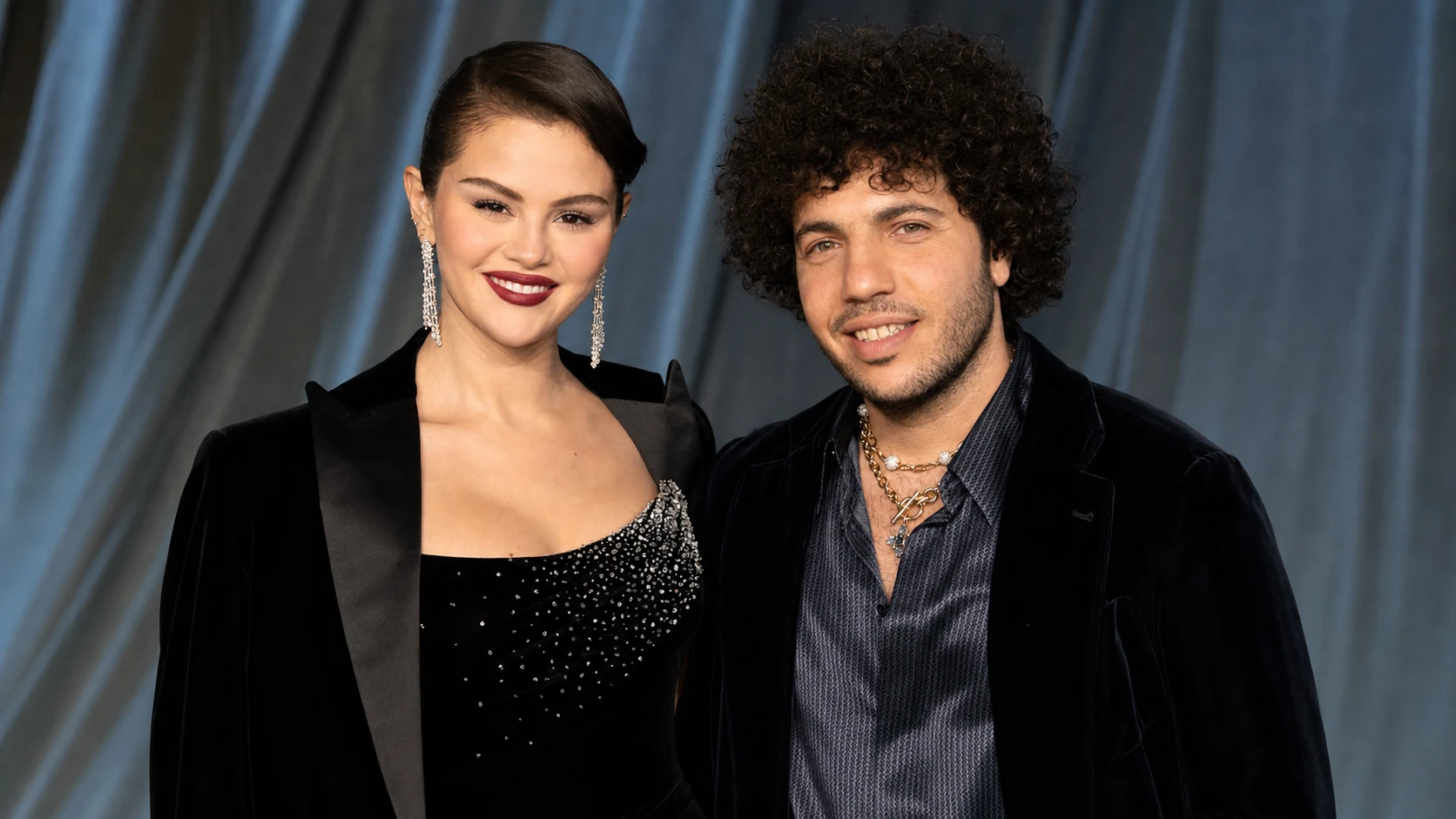
As a young musician, he sent recordings to producers, labels, and industry contacts. He traveled to pursue opportunities and gradually found mentors who helped him understand professional songwriting and production. His early work reflected a mixture of hip-hop interests and a growing instinct for mainstream pop structure.
One of the central figures in his development was producer and songwriter Dr. Luke. Working within that professional circle gave Blanco experience on commercial records and helped him learn how songs move from an idea to a finished release.
That period also showed one of Blanco’s defining strengths: he could adjust to different artists instead of forcing every performer into one sound. His ability to build trust in the studio later became as important as his technical production skills.
Career Breakthrough
Blanco’s major breakthrough came during the late 2000s, when he began contributing to a series of successful pop singles. His early credits included Katy Perry’s “I Kissed a Girl,” Britney Spears’ “Circus,” Kesha’s “TiK ToK,” and 3OH!3’s “Don’t Trust Me.”
Those songs placed him near the center of an era when pop music was blending electronic production, hip-hop rhythms, rock energy, and direct melodic hooks. Blanco became known for understanding what made a chorus immediate without removing the personality of the performer.
His success expanded quickly. He worked on Maroon 5’s “Moves Like Jagger,” Taio Cruz’s “Dynamite,” Rihanna’s “Diamonds,” and Katy Perry’s “Teenage Dream” and “California Gurls.” These were not minor album tracks; they became major international hits that helped define mainstream radio during the early 2010s.
By 2013, the Songwriters Hall of Fame had selected him for the Hal David Starlight Award, which recognizes younger songwriters who have already made a major impact. The honor confirmed that Blanco was no longer simply an emerging studio figure. He had become one of the most commercially successful song creators of his generation.
Major Collaborations and Public Recognition
Blanco’s credits continued to grow across pop, R&B, hip-hop, and alternative music. He collaborated with Ed Sheeran, Justin Bieber, Halsey, Khalid, SZA, Juice WRLD, The Weeknd, and many other artists.
His work with Bieber included “Love Yourself” and later “Lonely,” two songs with very different emotional tones. “Love Yourself” used sparse acoustic production and a restrained vocal approach, while “Lonely” addressed the isolation and pressure of childhood fame.
Blanco developed a reputation as a producer who could make performers comfortable enough to reveal something personal. Rather than acting only as a technician, he often became a conversational partner who helped artists identify the emotional point of a song.
His achievements include major songwriting and production honors, chart-topping singles, and Grammy recognition connected to the recordings he helped create. The exact number of records he has sold or songs he has written varies across promotional biographies, so broad claims involving billions of streams should be treated as changing industry totals rather than permanent figures.
Becoming a Recording Artist
For much of his career, Blanco’s name appeared in the credits while other artists stood at the front of the stage. That changed in 2018 when he released music under his own name as a lead artist.
His debut single, “Eastside,” featured Halsey and Khalid. The song became an international success and introduced Blanco to listeners who had heard his work for years without knowing who produced it.
He released the project Friends Keep Secrets in 2018, followed by Friends Keep Secrets 2 in 2021. The title reflected his collaborative style: Blanco remained surrounded by established singers rather than attempting to become a conventional solo vocalist.
His recordings often function as producer-led projects in which he shapes the concept and brings together performers suited to each song. This model allowed him to become more visible without abandoning the collaborative role that had defined his career.
Relationship With Selena Gomez
Blanco’s relationship with singer and actress Selena Gomez became public in 2023. Their romance attracted intense attention because Gomez had one of the world’s largest social media followings and had spent much of her adult life under celebrity scrutiny.
The couple had professional history before confirming their relationship. Blanco had worked on music connected to Gomez, and their later partnership combined personal and creative elements.
They announced their engagement in December 2024. Their public appearances and affectionate social media posts made Blanco a familiar figure to audiences who did not closely follow record production.
Gomez has Mexican American heritage and has spoken openly about Christianity, while Blanco comes from an Ashkenazi Jewish family. Their different backgrounds have led to online questions, but one partner’s ethnicity does not transfer to the other. Blanco remains Jewish American, and Gomez’s ancestry remains her own.
Public discussion of their future family life has included Jewish wedding traditions and the possibility of combining customs. Private details about children or long-term household plans should not be assumed unless the couple confirms them.
Cookbook, Television, and Business Ventures
Blanco’s interests extend beyond recording studios. His cookbook, Open Wide, formalized a long-running public image built around cooking elaborate meals for friends and artists.
The book was less about strict culinary instruction than hospitality. Blanco presented cooking as a means of creating intimacy, lowering social barriers, and bringing people together. His Jewish family recipes sat alongside dishes drawn from his wider friendships and travel experiences.
He has also appeared in online cooking videos and television projects, often using a deliberately casual and comedic style. His presentation can be messy or exaggerated, but it supports the same public identity seen in his music: collaborative, social, and unconcerned with polished celebrity formality.
Blanco has also been involved in music publishing and record-label activity. Those ventures allow him to support other artists and writers while building income beyond individual production fees.
Net Worth and Income Sources
Benny Blanco’s exact net worth has not been publicly confirmed. Celebrity finance websites often publish estimates ranging into the tens of millions of dollars, but those numbers are not audited financial disclosures and should not be treated as established fact.
His wealth is likely based on several income streams. Songwriting royalties, production fees, publishing rights, recording income, catalog ownership, label ventures, book sales, and media appearances can all generate revenue.
A producer with long-term credits on successful songs may continue receiving royalties years after a track’s release. The value of those rights depends on contracts, ownership percentages, streaming activity, radio use, licensing, and whether any catalog interests have been sold.
Blanco’s career clearly places him among the music industry’s financially successful producers. Assigning a precise personal fortune, however, would require access to private contracts, investments, taxes, debts, and business holdings that are not publicly available.
Public Image and Personality
Blanco’s public image differs from that of the polished, distant hitmaker. He presents himself as informal, expressive, comedic, and deeply interested in maintaining friendships.
His appearance and sense of humor have sometimes attracted harsh commentary online, especially since his relationship with Gomez became public. Much of that reaction relies on superficial comparisons and says little about his work or character.
Artists who have collaborated with him often describe a studio environment built on trust and conversation. His success suggests that performers value not only his ear for melody but also his ability to make creative work feel less guarded.
His openness about food and Jewish family traditions has added depth to that image. Rather than presenting ethnicity as a marketing label, he has shown it through ordinary details: meals, holiday gatherings, memories of relatives, and the desire to feed people he cares about.
Recent Work and Current Status
From 2024 onward, Blanco’s public profile expanded beyond music production. The release of Open Wide, his engagement to Selena Gomez, and continued creative collaborations made him a regular subject of mainstream entertainment coverage.
He remains active as a producer, songwriter, artist, and media personality. His catalog continues to introduce him to new listeners, while older hits maintain his standing within the industry.
As of August 2026, Blanco’s public life is closely connected to both his established music career and his relationship with Gomez. He has not abandoned production for celebrity visibility; instead, his personal profile has caught up with a professional record that was already extensive.
His exact future projects, private finances, and family plans are not publicly confirmed. What is clear is that he has moved from being known mainly by music-industry insiders to becoming a recognizable public figure in his own right.
Frequently Asked Questions
What is Benny Blanco’s ethnicity?
Benny Blanco is of Ashkenazi Jewish heritage. He is American by nationality and was born and raised in Virginia.
What is Benny Blanco’s real name?
His birth name is Benjamin Joseph Levin. Benny Blanco is the professional name he uses as a producer, songwriter, and recording artist.
Is Benny Blanco Hispanic or Latino?
There is no reliable public evidence that Blanco is Hispanic or Latino. Confusion usually comes from his stage name, but his documented family background is Ashkenazi Jewish American.
How old is Benny Blanco?
Benny Blanco was born on March 8, 1988. He is 38 years old as of August 2026.
Where was Benny Blanco born?
He was born in Reston, Virginia, in the United States. He grew up in the Washington, D.C., area before building his music career.
Is Benny Blanco religious?
Blanco publicly identifies as Jewish and participates in Jewish cultural traditions. His exact level of religious observance and any denominational affiliation are not publicly confirmed.
What is Benny Blanco’s net worth?
His exact net worth is private. Online figures are estimates, though his songwriting royalties, production work, publishing interests, recordings, cookbook, and business ventures have likely made him very wealthy.
Conclusion
Benny Blanco’s ethnicity is best described as Ashkenazi Jewish American. His heritage appears in his family memories, holiday celebrations, humor, and love of traditional food rather than as a narrowly defined public brand.
His professional name may invite mistaken assumptions, but his birth name and his own accounts offer a clear answer. He is Benjamin Joseph Levin, a Virginia-born American whose Jewish upbringing remains part of his adult identity.
That background is only one part of a larger story. Blanco became influential because he could help artists create songs that felt personal while reaching enormous audiences, often without seeking attention for himself.
Now that his relationships, cooking, and personality are nearly as visible as his production credits, the public is seeing more of the person behind the records. His Jewish heritage gives that portrait context, but his lasting reputation rests on the music, friendships, and collaborative instincts he has built over more than two decades.
