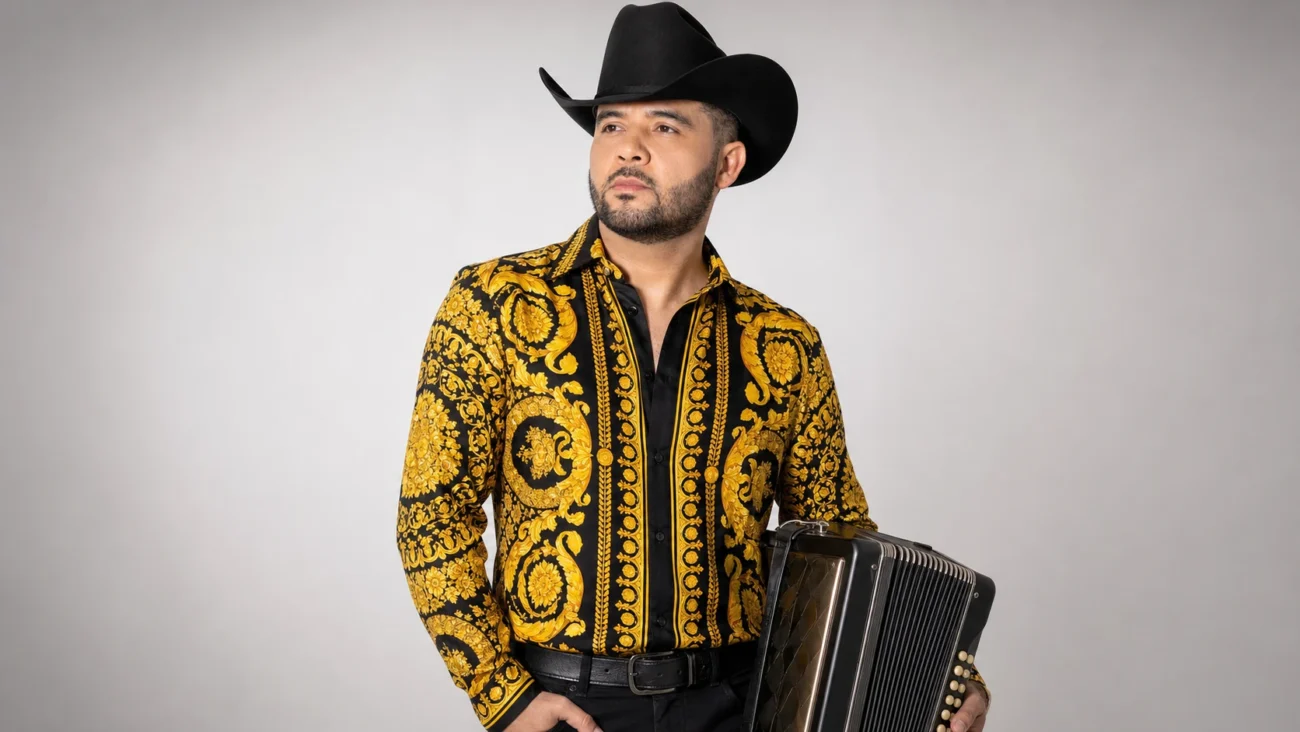
Darey Castro had already survived a deadly attack, topped a major regional Mexican radio chart, and earned a Latin Grammy nomination before a collaboration with Peso Pluma introduced him to a new generation. The Mexican singer and accordionist, best known as the central figure in Los Dareyes de la Sierra, has built a career that connects traditional sierreño and banda music with the modern corridos movement.
His return to wider attention wasn’t based on nostalgia alone. After appearing on the Billboard Hot 100 in 2023, Castro released the collaboration-heavy album Redención in 2025, launched his first United States headlining tour, and followed it with the 2026 album SABIA. Songs including “VVS,” “Vita Fer,” “Frecuencia,” and “MATCHA” gave him a second commercial chapter more than two decades after his early career began.
Much of Castro’s professional history is documented through music charts, releases, interviews, and industry records. His private life is different. His exact birth date, age, education, marriage, children, and personal finances have not been reliably confirmed in major public sources.
Who Is Darey Castro?
José Darey Castro is a Mexican singer, accordionist, musician, and songwriter from Navojoa, Sonora. He is best known as the lead vocalist and main creative figure behind Los Dareyes de la Sierra, a regional Mexican act associated with sierreño, norteño, banda, romantic ballads, and corridos.
The naming can cause confusion. Music releases usually appear under Los Dareyes de la Sierra, while interviews and promotional coverage may call the act Dareyes de la Sierra or refer to Castro simply as Darey. These names point to the same musical identity, with Castro serving as its most consistent public figure.
Los Dareyes de la Sierra has included other musicians during different periods. Billboard identified Miguel Enrique Razcón and Juan Vázquez alongside Castro in coverage of the group’s 2023 chart return. More recent artist descriptions place greater emphasis on Castro as the singer and accordionist at the center of the project.
Castro’s nationality is Mexican, and his musical identity remains closely tied to Sonora. Later reporting has also described him as based in Los Angeles, a city with a large audience for regional Mexican music and a strong connection to the genre’s touring and recording business.
Early Life and Musical Beginnings
Castro has shared only limited information about his childhood and family. His parents’ names, siblings, household background, and formal education are not publicly confirmed in dependable profiles. What is known is that music entered his life at an early age.
His father gave him his first guitar when he was 10 years old. Castro later recalled that he broke the instrument during a childhood outburst, but he returned to playing guitar at 15 and continued developing as a musician. That early experience eventually expanded into singing, songwriting, and accordion performance.
The accordion became one of the defining sounds of his career. Even as his recordings moved between sierreño, banda, norteño, and current corrido production, the instrument helped preserve a connection to northern Mexican musical traditions.
Castro’s exact date of birth has not been established by an official biography, civil record, or direct public statement. Several entertainment websites publish different birth years, but those claims lack consistent sourcing. His precise age should therefore be treated as not publicly confirmed.
Los Alteños de la Sierra and the 2004 Attack
Before becoming known through Los Dareyes de la Sierra, Castro performed with Los Alteños de la Sierra. The group belonged to the sierreño tradition associated with direct vocals, string-led arrangements, and songs about love, personal conflict, regional identity, and danger.
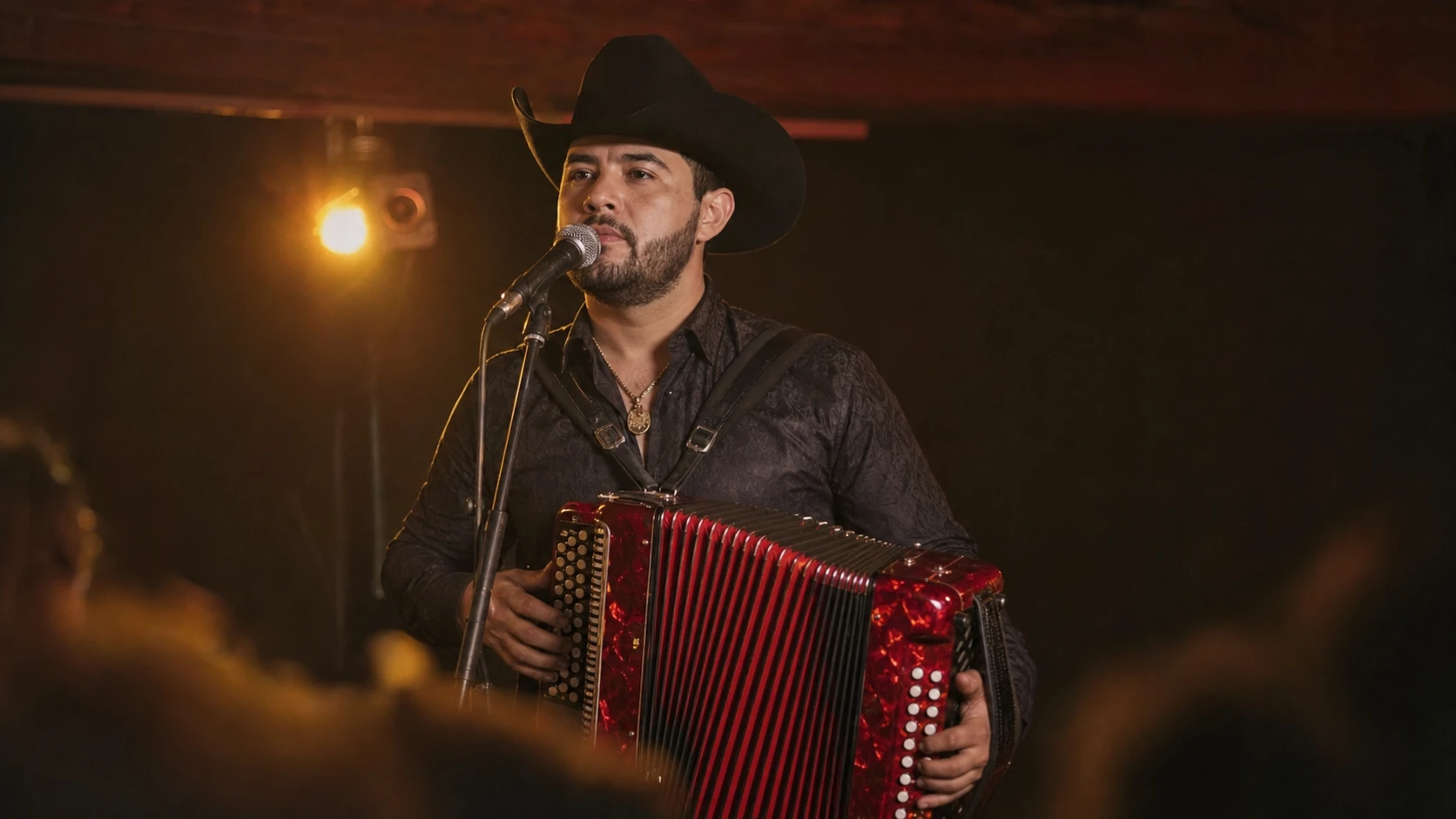
A deadly attack involving Los Alteños de la Sierra in 2004 changed Castro’s career. Reliable music biographies confirm that members of the group were attacked and that Castro survived. The incident left him facing uncertainty about whether he could or should continue performing.
Many websites repeat specific claims about the location, attackers, motive, and number of victims. Those details are not presented consistently in the strongest available sources, so they shouldn’t be stated as settled fact. The confirmed account is serious enough: the attack was fatal, Castro survived, and his original group could not continue in the same form.
Rather than leave music, Castro rebuilt his career under the Los Dareyes de la Sierra name. That decision became one of the most important turning points in his life. It allowed him to continue recording while creating a distinct identity separate from the group associated with the tragedy.
Career Breakthrough
Los Dareyes de la Sierra gained attention through songs that combined emotional storytelling with accessible regional Mexican arrangements. Early recordings such as “Sufre” and “Enséñame a Olvidar” helped establish Castro as a singer capable of carrying romantic material as convincingly as corridos.
His biggest early breakthrough came with “Hasta el Día de Hoy.” The song spent 11 weeks at No. 1 on Billboard’s Regional Mexican Airplay chart in 2008 and reached No. 3 on the wider Latin Airplay ranking. It remained on the regional chart for 48 weeks, giving Castro one of the most durable hits of his first commercial peak.
“Hasta el Día de Hoy” focused on emotional pain that remains long after a relationship ends. Castro’s rough, forceful delivery gave the song more weight than a polished romantic ballad might have carried. Its success showed that his appeal extended beyond corrido audiences.
The 2008 album Con Banda also entered Billboard’s Top Latin Albums chart. The appearance confirmed that Los Dareyes de la Sierra had moved from regional recognition into the national Latin music market.
Latin Grammy Recognition
Castro’s work received formal industry recognition in 2009 when Los Dareyes de la Sierra earned a Latin Grammy nomination for Una Copa Más. The album competed in the Best Banda Album category at the 10th Annual Latin Grammy Awards.
The group did not win the award, which went to Alacranes Musical for Tu Inspiración. Still, the nomination placed Castro’s work among the year’s recognized banda releases and remains a major achievement in his career.
The honor also showed his range. Castro’s roots were connected to sierreño and norteño performance, but he could adapt his voice and songs to the larger instrumentation associated with banda. That ability to move between formats later helped him adjust to another major change in regional Mexican music.
Musical Style and Public Image
Darey Castro’s music covers more ground than the corrido label sometimes suggests. His catalog includes breakup songs, traditional regional Mexican storytelling, banda recordings, norteño arrangements, and material shaped by corridos tumbados.
His voice is one of his most recognizable traits. It carries a grainy, commanding quality that can sound wounded in a romantic song and confrontational in a corrido. He often sings with direct phrasing rather than smoothing out the edges of his delivery.
Castro also recorded cannabis-themed material before such references became common in mainstream corridos. His 2007 song “Los En-Kush-ados” belonged to a style he described as “corridos verdes.” He later said the public was not fully ready for those songs at the time.
By the 2020s, references to marijuana, luxury goods, nightlife, weapons, and excess had become far more common among commercially successful corrido artists. That shift made parts of Castro’s older musical identity feel unexpectedly current.
His public image now combines veteran status with a willingness to work inside younger artists’ sound. He has updated his production and visual presentation without abandoning the accordion, vocal style, and northern Mexican identity that shaped his first period of success.
“VVS” and a New Generation of Listeners
Castro’s modern comeback accelerated with “VVS,” a collaboration credited to Peso Pluma, Edgardo Nuñez, and Los Dareyes de la Sierra. The song appeared on Peso Pluma’s 2023 album GÉNESIS.

“VVS” debuted at No. 54 on the Billboard Hot 100. It marked the first appearance on the all-genre United States chart for both Edgardo Nuñez and Los Dareyes de la Sierra. The track also reached the top 10 of Billboard’s Hot Latin Songs chart.
The collaboration mattered because it introduced Castro to listeners who knew little about his 2008 radio success. Peso Pluma had become one of the leading figures in the international rise of corridos tumbados, and his audience gave Castro access to a younger, streaming-centered market.
Castro was not presented only as a nostalgic guest. He received songwriting credit and brought a vocal character that contrasted with the younger performers around him. The song worked as a meeting between two eras rather than an attempt to disguise his age or career history.
Redención and the 2025 Comeback
Castro expanded that renewed attention into the album Redención, released through Double P Records in May 2025. The 14-track project paired Los Dareyes de la Sierra with a guest artist on every song.
Collaborators included Peso Pluma, Tito Double P, Neton Vega, Gabito Ballesteros, Luis R Conriquez, Grupo Firme, Santa Fe Klan, and Legado 7. The guest list connected Castro with artists from corridos tumbados, banda, rap, and modern norteño.
“Vita Fer,” featuring Tito Double P, became one of the album’s strongest performers and reached No. 1 on Billboard’s Mexico Songs chart. Other tracks included “Supreme” with Peso Pluma, “Boneless” with Neton Vega, and “Te Engañé” with Gabito Ballesteros.
The album debuted at No. 3 on Spotify’s global album-debut ranking. A deluxe version followed in June 2025, expanding the project to 28 songs.
“Frecuencia,” included in the expanded release, became another major success and reached No. 3 on Billboard’s Mexico Songs chart. Its popularity showed that Castro’s return could produce more than one high-profile collaboration.
The title Redención, meaning redemption, fit the circumstances of his career. Castro had survived violence, shifting industry tastes, and a long period outside the center of the charts. The album presented him not as a retired singer being honored by younger stars, but as an active artist seeking a new peak.
Touring and Live Career
The success of Redención led to Castro’s first United States headlining tour. The 20-date run began at the Belasco in Los Angeles in August 2025 and included scheduled appearances in cities such as Las Vegas, San Diego, Chicago, Atlanta, Houston, and Portland.
A first headlining tour after more than two decades in music may seem unusual. Regional Mexican artists have long built careers through clubs, festivals, shared bills, private events, and appearances with other acts rather than a traditional national theater tour.
Streaming changed that calculation by showing where listeners were concentrated. Castro’s renewed audience could now be measured across cities, giving promoters a clearer picture of demand.
The tour also required him to balance two groups of fans. New listeners wanted the songs connected to Redención and current corridos, while longtime followers expected “Hasta el Día de Hoy” and other earlier favorites. Castro indicated that his shows would introduce a newer musical side without abandoning the records that established him.
SABIA and His Current Status
Castro continued his comeback in 2026 with SABIA, a 21-song album released through Double P Records in April. Unlike Redención, which relied heavily on guest appearances, SABIA placed more attention on Castro himself.
The album included songs such as “TRANKIS MORRIS,” “SAYKO,” “PARADISE,” “MACALLAN 12,” “WACHEN AL LOCO,” and “MATCHA.” Its titles and themes continued his recent focus on nightlife, wealth, personal codes, and corrido characters.
“MATCHA” became the project’s clearest chart success. By July 2026, it had reached the upper portion of Billboard’s Hot Latin Songs chart and the top 10 of Hot Regional Mexican Songs.
That performance was important because it followed an album built around collaborations. It suggested that at least part of Castro’s new audience had become interested in him, not only in the younger stars who helped introduce Redención.
As of July 2026, Los Dareyes de la Sierra remained active on streaming platforms and in live performance. Concert schedules can change, but current listings showed continued United States activity during the second half of the year.
Marriage, Children, and Private Life
Darey Castro has kept his family and romantic life largely outside his public career. A spouse or long-term partner has not been reliably identified in major interviews, official biographies, or reputable music coverage.
Claims about whether he is married or has children appear on some entertainment websites and social-media pages. Those statements often lack direct quotes, named sources, public records, or confirmation from Castro. His relationship status and children should therefore be described as not publicly confirmed.
The same caution applies to his parents and siblings. Apart from the story of his father giving him a guitar, Castro has not made detailed family information a major part of his public image.
His privacy is consistent with many regional Mexican musicians whose professional visibility does not include regular discussion of their home lives. The absence of confirmed information should not be treated as evidence of secrecy, conflict, or any specific relationship status.
Net Worth and Income Sources
Darey Castro’s net worth has not been publicly verified. Websites that attach exact dollar amounts to his name do not provide financial statements, contracts, property records, or reliable business disclosures.
His likely income sources include music streaming, record sales, songwriting royalties, live performances, touring, merchandise, and licensing. His releases through Double P Records and collaborations with major artists may also generate recording and publishing income, depending on contractual terms that have not been disclosed.
A successful tour and millions of streaming listeners can produce meaningful revenue, but gross earnings are not the same as personal wealth. Artist income is divided among labels, publishers, managers, agents, musicians, producers, travel costs, taxes, and other expenses.
Any figure presented as Castro’s personal fortune should be treated as an unverified estimate unless it is supported by credible financial documentation.
Frequently Asked Questions
What is Darey Castro’s full name?
His publicly reported name is José Darey Castro. He performs as the singer and accordionist behind Los Dareyes de la Sierra.
How old is Darey Castro?
Darey Castro’s exact birth date and age are not publicly confirmed by a reliable official source. Online pages provide conflicting years, so no precise age can be stated with confidence.
Where is Darey Castro from?
He is from Navojoa, Sonora, Mexico. He has also been described as based in Los Angeles during the current stage of his career.
Is Darey Castro the lead singer of Los Dareyes de la Sierra?
Yes. Castro is the lead vocalist, accordionist, and central public figure associated with Los Dareyes de la Sierra, although other musicians have performed as part of the act.
What is Darey Castro’s biggest song?
“Hasta el Día de Hoy” is his defining early hit and spent 11 weeks at No. 1 on Billboard’s Regional Mexican Airplay chart. His major recent songs include “VVS,” “Vita Fer,” “Frecuencia,” and “MATCHA.”
What happened to Darey Castro in 2004?
He survived a deadly attack involving Los Alteños de la Sierra, the group he performed with before establishing Los Dareyes de la Sierra. The motive and some details remain unclear in reliable public reporting.
Is Darey Castro married?
His marital status is not publicly confirmed. Castro has kept his romantic and family life private, and claims published on unsourced biography pages should not be treated as fact.
Conclusion
Darey Castro’s career stands out because it contains two genuine periods of public success. The first came through regional radio, banda recordings, and a Latin Grammy nomination. The second grew from streaming, younger collaborators, and the international expansion of corridos.
His comeback did not require him to erase his past. The accordion, rough-edged voice, Sonora roots, and direct storytelling remained central even as the production and collaborators changed.
The most compelling part of Castro’s biography is not an unverified age, relationship, or net-worth figure. It is his ability to continue after a deadly attack, rebuild his musical identity, and reach a new audience decades after his first breakthrough.
By 2026, he was no longer simply remembered for “Hasta el Día de Hoy.” He had become an active chart artist again, showing that longevity in regional Mexican music can come from adaptation without surrendering the sound that made an artist recognizable.
